You don’t have to know how therapy works before you begin.
Reaching out for counseling can feel vulnerable enough.
Wondering what happens afterward shouldn’t make it harder.
Here’s what you can expect.
Starting counseling at Pathways, step by step
Request an appointment
Start by completing the confidential inquiry form.
You’ll provide a few basic details so Pathways can understand what you’re looking for and determine whether the practice may be an appropriate fit.
We’ll connect with you
Pathways will follow up regarding availability, scheduling, payment or insurance information, and any questions you may have within 48 hours.
Complete your paperwork
Before your first session, you’ll complete the necessary intake paperwork.
This gives Michelle some background information and leaves more of your appointment available for conversation.
Your first appointment
Your first session is primarily about beginning to understand:
- What brought you here?
- What has life been like lately?
- What would you like to be different?
You won’t be expected to tell your entire story during the first hour.
We’ll start where you are.
We begin understanding the bigger picture
As counseling continues, you and Michelle can begin identifying experiences, patterns, relationships, beliefs, or behaviors that may be contributing to what you’re experiencing.
The process will look different for every person.
We determine a path forward together
Counseling is collaborative.
Goals may evolve as you understand yourself more clearly, and the work may involve learning new skills, examining difficult experiences, changing patterns, establishing boundaries, or approaching familiar situations differently.
There isn’t one prescribed pathway through therapy.
That’s part of why the practice is called Pathways.
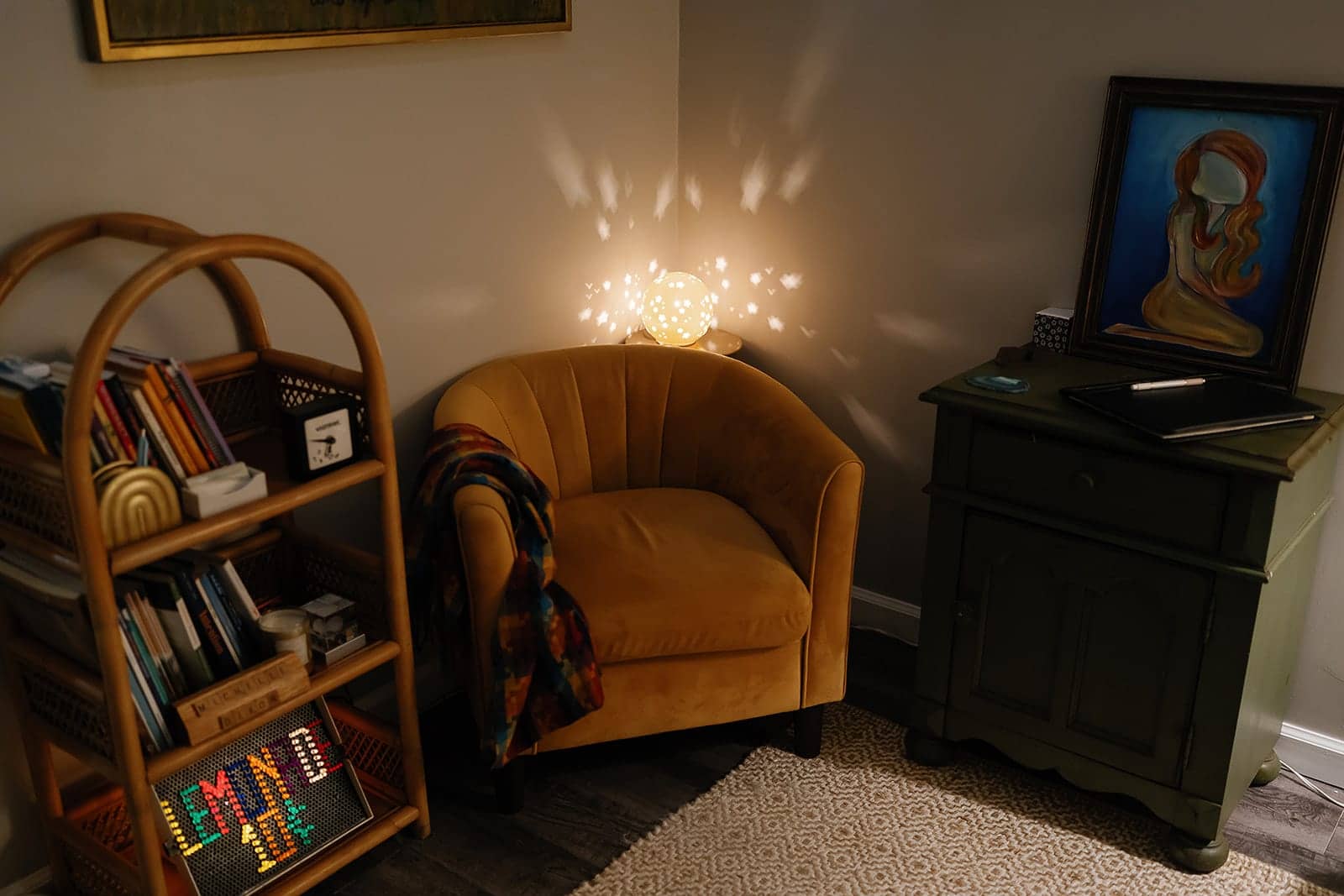
A quiet, private place to talk
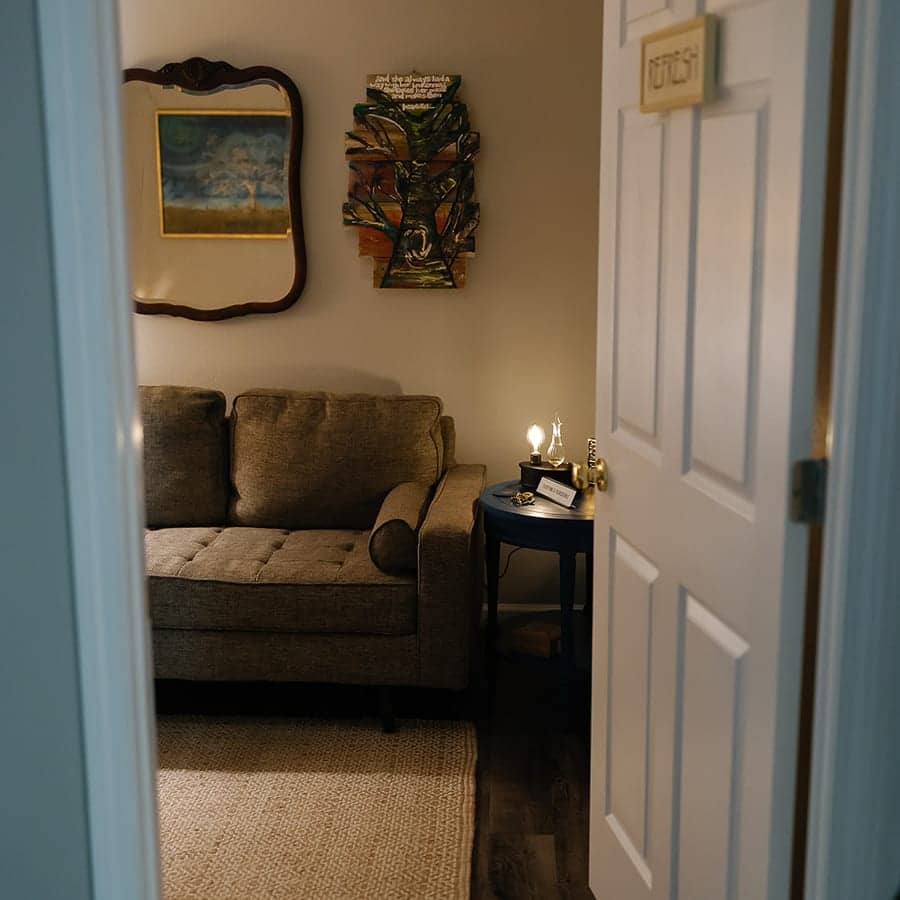
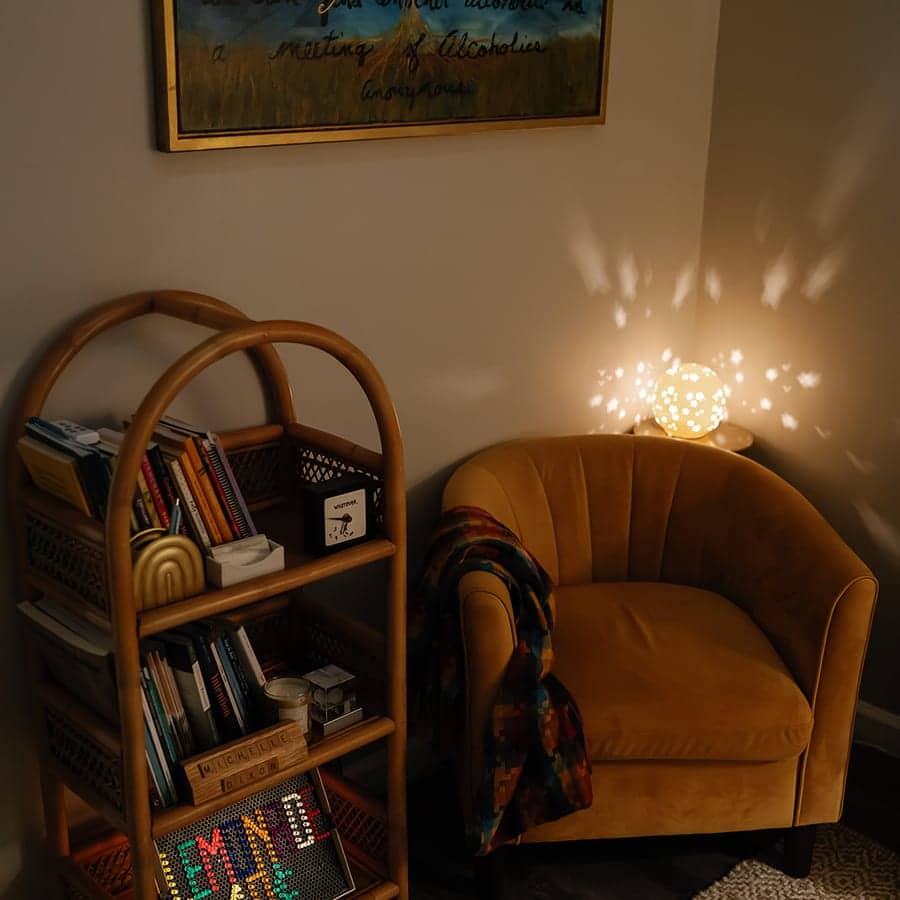
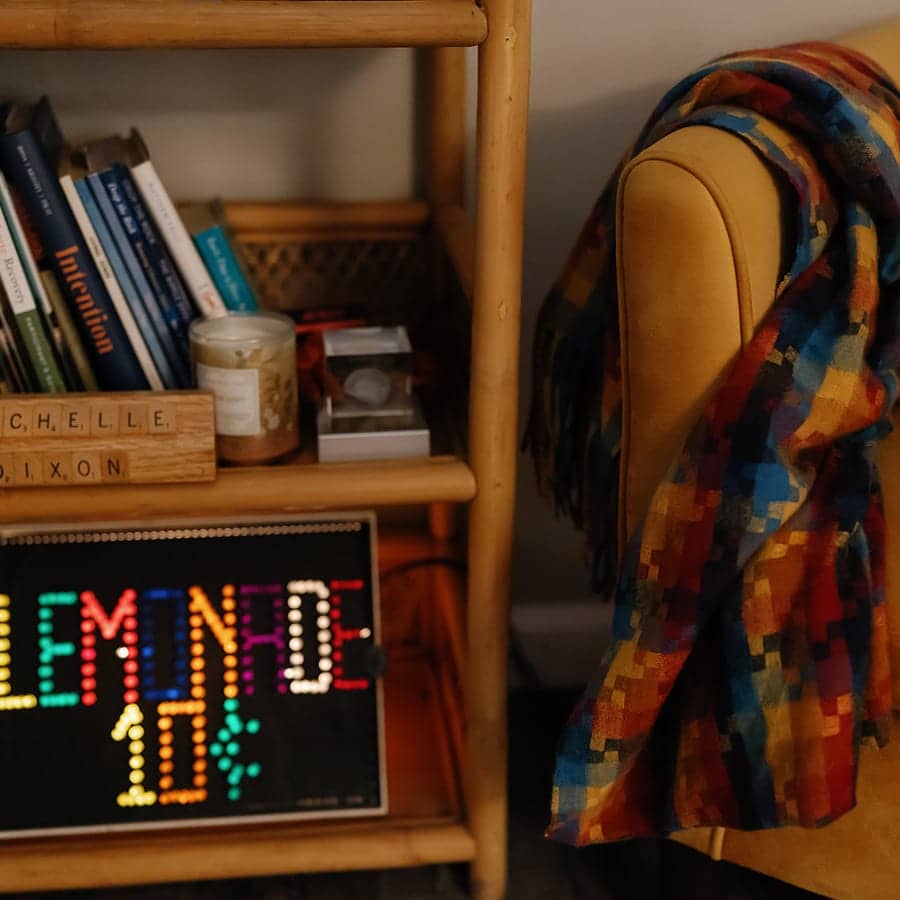
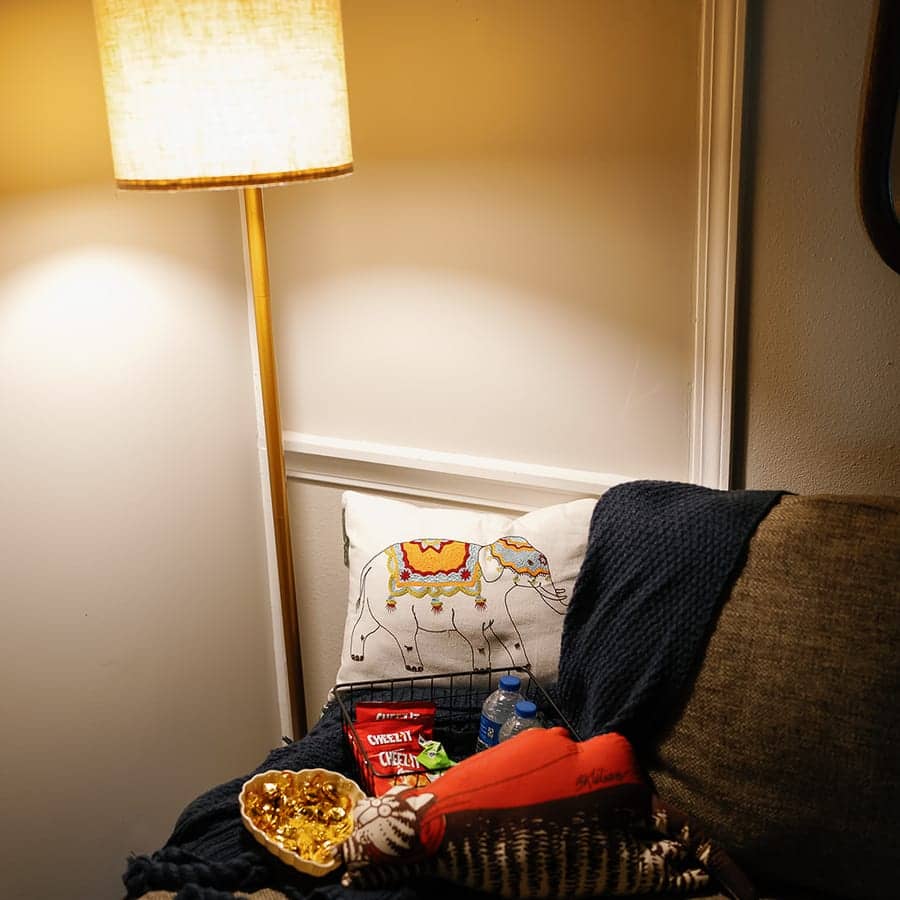
Sessions happen in a small, comfortable office rather than a clinical exam room — soft light, a comfortable chair, and a door that closes.
If it feels daunting to walk into a therapist’s office for the first time, that’s normal. Knowing what the room looks like before you arrive is one less unknown.